What the evidence added
Four details the word “Excellent” does not explain by itself.
A pre-purchase inspection is not only about finding a catastrophic defect. It gives the buyer a documented baseline: what looked strong, what deserves monitoring, and what should be discussed with the seller.
1
Prior collision history had physical context
The attached history report recorded a minor-to-moderate sideswipe collision. The inspector also found that the driver’s door stuck slightly and noted prior bodywork with a possible hinge or latch adjustment.
2
The coolant level was low
The coolant condition looked good, but the level was rated Fair. No obvious leak was visible during the appointment, so the report preserved it as a potential issue to monitor or investigate further.
3
The third brake light was out
The main electrical checks were strong, but the center high-mounted brake light was not operating. It is a small finding, yet exactly the kind of item that can disappear during a rushed walkaround.
4
Brake wear was quantified
The report estimated 40% front pad life and 60% rear pad life. That is not an emergency claim; it is useful ownership and maintenance context beyond the purchase price.
The balanced conclusion matters.
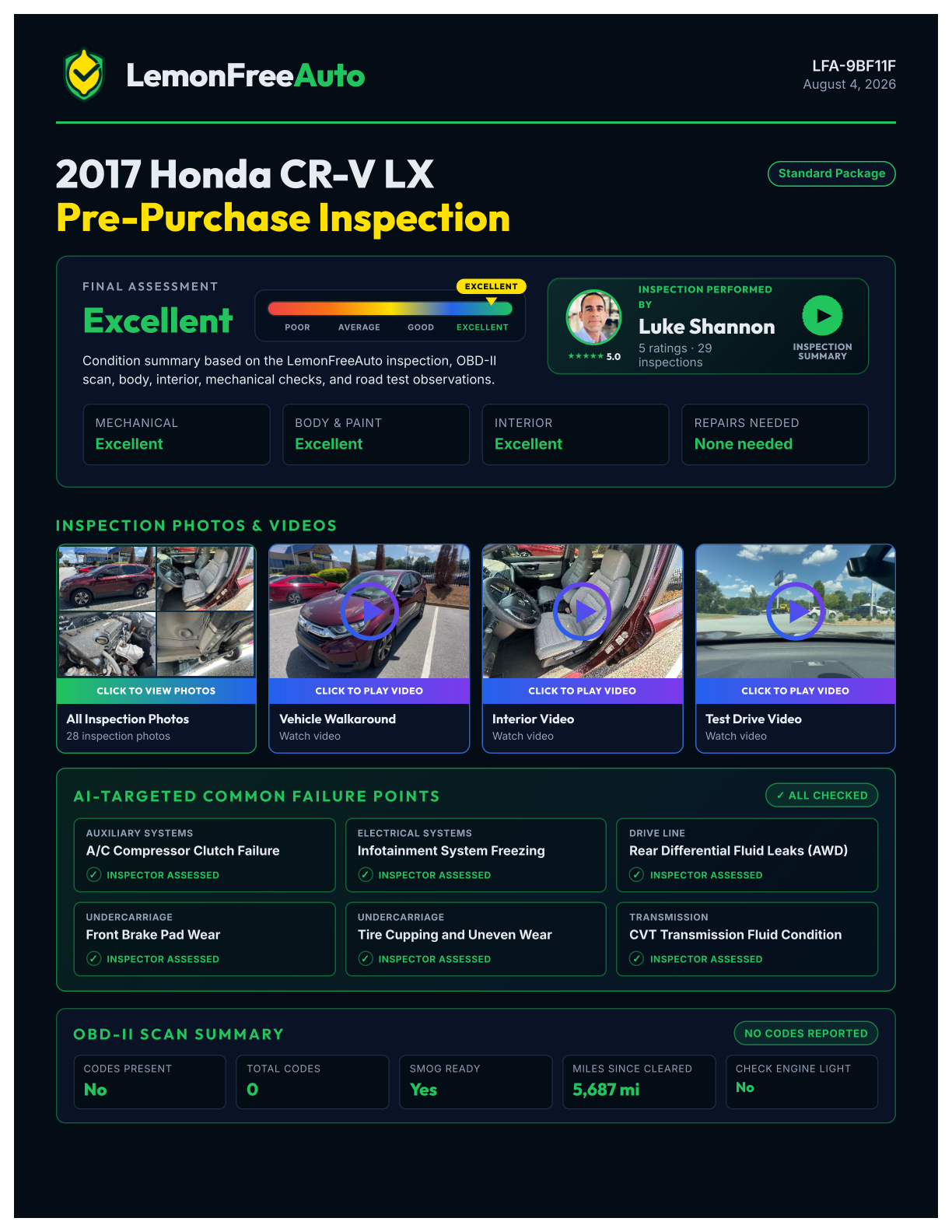
The inspection also reported no active, pending, stored, or enhanced diagnostic codes; complete emissions readiness; matching tires with strong tread; no observed fluid leaks; and no apparent frame damage. The purpose was not to turn a good vehicle into a bad one. It was to replace assumptions with documented evidence.